Romsdalsmuseet
71 20 24 60
Per Amdams veg 4
6413 Molde
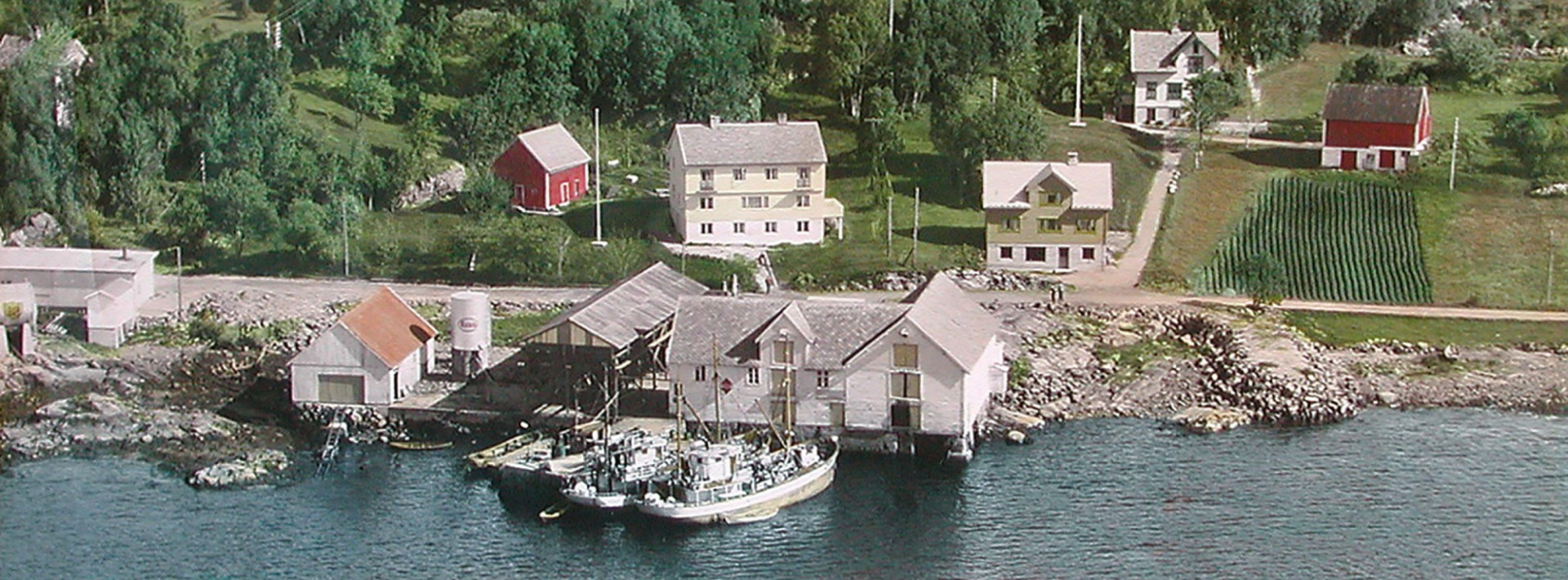
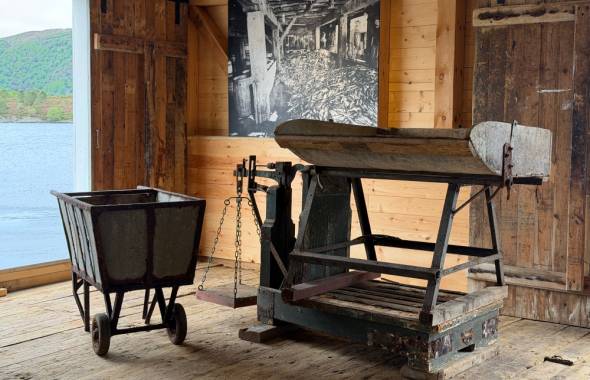
Sea fishing and fish processing are an important part of Midsund's history. Antonbua is typical of the industry and the exhibition shows glimpses of this history. On both sides of Midsund there were several sea sheds used for receiving fish, salting herring in barrels and drying clipfish for export. Antonbua is typical for the industry and the exhibition shows glimpses of this history.
Entrance fees:
Guided tours can be arranged for groups the whole year. Send us a request.


The sea shed is named after Anton Elias Ingebrigtsen Misund (1878 - 1957). From 1903 Anton was skipper of "Brødrene" (Bøsluppen), the first deep-sea fishing boat in Midsund. He owned the boat together with his brothers Iver Breivik and Knut Sjøvik. In 1907 Anton registered his trading business and "will run a general country trade". From a small grocery store in "Krabbevikbua" he also sold herring and fish. Here he also rented a room and lived with his family. In the first years he salted herring.
The business was soon expanded. In 1912 a new sea shed and quay were built at "Strandheim", about 150 meters to the west. Antonbua was then the new base for receiving and salting fish for the production of clipfish. In 1915 the family built their own residence with a shop, right next to Antonbua. The sea shed soon became too small and several expansions were made. In the 1920s, two large sea sheds stood side by side. Now herring salting also took place at the facility. Later, a major reconstruction took place, where Antonbua was rebuilt into an angular building with two floors and an attic. This is the shape the building has today.
In 1922, Anton Misund bought a 73-foot-long cargo ship. "Embla" went on a so-called "slofart" from Lofoten, which is the return of salted fish for drying into clipfish. A new quay was now built so that "Embla" could have its permanent port at Antonbua. In the 1930s, the facility was expanded; a net hangar was set up for drying herring nets and nets and tanks were installed for bunkering oil, gasoline and water. The netting was finished around 1960 and a shed was then erected for receiving herring instead. Throughout the 1950s and 60s, there was a lot of activity at the facility. While herring was being salted on the first floor, bank fish were unloaded into the receiving area to be washed and stained. Up on the second floor, they have installed a mechanical dryer to increase the production of clipfish. The fan itself is electric, while the heating is done using fuel oil. The house's own generator supplies the sea house with electricity. From 1949 to 1973, a grocery store was also operated on the second floor. Anton's daughter, Pauline, runs the store. The last bank fish was received in 1971, marking the end of fish production in Antonbua. In the pioneering era of salmon farming, from the late 1970s, Antonbua and the surrounding area became the base for the companies Misundlaks and Mico.