
Romsdalsmuseet
71 20 24 60
Per Amdams veg 4
6413 Molde
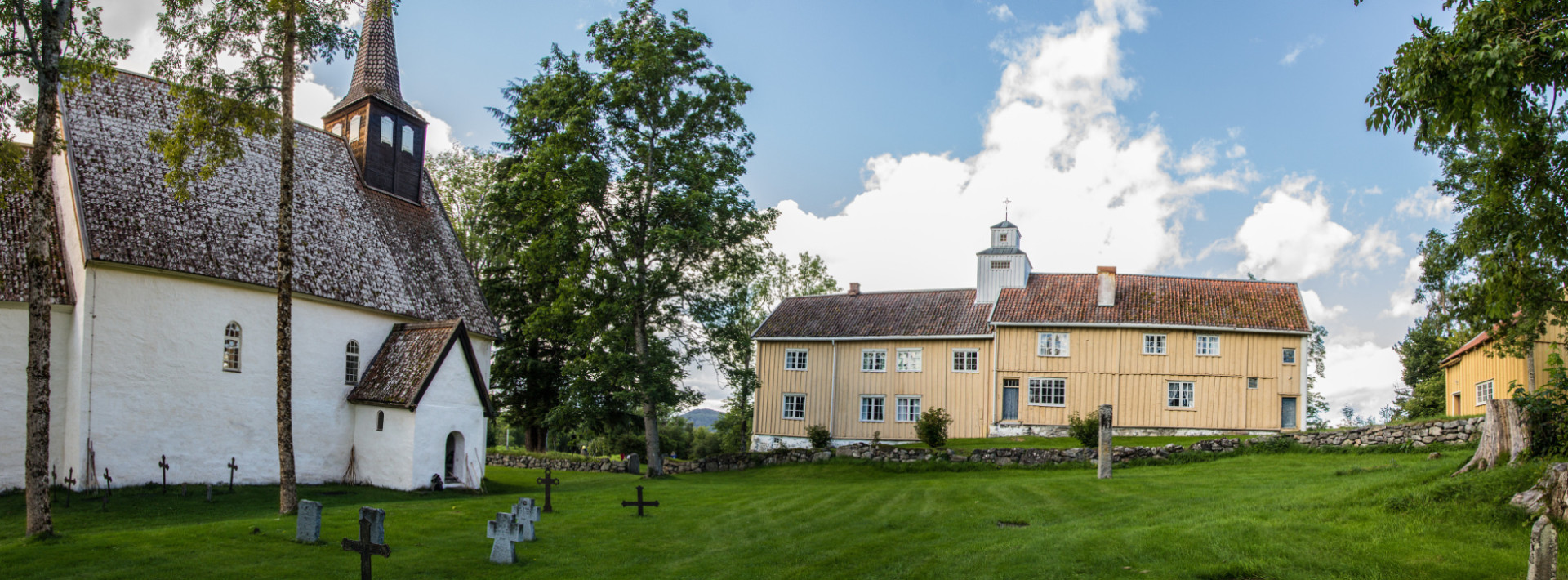
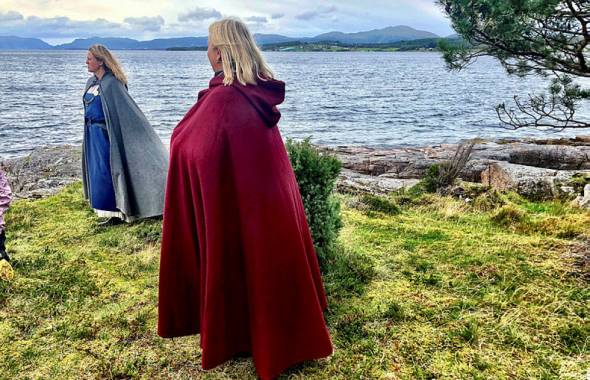
Veøya was settled at an early date and became an important centre of power in the Romsdal region during the Middle Ages. The island served as both an assembly site (thing) and a market town.
Beautifully situated in the Romsdal Fjord, Veøya offers visitors a unique opportunity to explore its rich history. Our guides will take you on a walk around Nordøya (the northern part of the island), sharing stories about archaeological discoveries and historical events in the area. The tour includes a visit to the unique stone church dating from the 12th century, as well as the old rectory.
Veøya is one of the key sites along the Coastal Pilgrimage Route (Kystpilegrimsleia). See further information below.
A visit to Veøya is truly a rare and unforgettable experience!
On this idyllic island in the Romsdal Fjord stands a medieval church, a burial ground, a rectory with its main residence, and three other surviving buildings. The name Veøya means “the Holy Island.”
Beneath today’s cultural landscape lie the remains of a medieval market town, believed to have had as many as 400 inhabitants. In 1162, a major naval battle took place near the island of Sekken in the Romsdal Fjord between King Håkon Herdebrei and Erling Skakke. According to Snorri Sturluson’s royal sagas, Håkon hoped to receive support from the “townspeople” of Veøya. Håkon Herdebrei was killed in the battle.
Veøya flourished as a political, ecclesiastical, and economic centre from about 900 to 1300.
The Black Death in the mid-14th century had dramatic consequences throughout Norway and contributed significantly to the decline of Veøya’s market town. From the 16th century onwards, fishing and the timber trade became increasingly important industries in Romsdal, and much of the region’s commerce gradually shifted toward the coast.
Although the town disappeared, Veøya remained an important centre in Romsdal. For a long period, the parish of Veøy was among the largest and wealthiest in Norway.
The island hosted the regional assembly (fylkesting) until 1632.
From around 1600 onwards, however, only the priest’s family and their servants lived permanently on the island, a situation that continued until the 1890s. The rectory that stands today was built in 1752–53.
In 1970, the northern part of Veøya, known as Nordøya, was designated a protected natural and cultural landscape. The conservation regulations state that the purpose of the protection is to preserve a historic cultural landscape with its distinctive natural environment surrounding Veøy’s old county church.
In 1905, the rectory and parts of the island were purchased by the colourful and eccentric William Coucheron-Aamot, who left his mark on both the buildings and the island’s remarkable history.
In 1990, Romsdal Museum received the property as a testamentary gift, while the church remains owned by Molde Municipality.
Veøya is one of the key destinations along the Coastal Pilgrimage Route (Kystpilegrimsleia): https://www.pilegrimsleden.no/interessepunkter/veoy
How to Reach the Key Sites
Travelling along the coast often requires the use of various forms of transport. Since some of the key pilgrimage sites are located on islands, you may need to join organised tours to reach them.
To visit Veøya, we recommend booking one of our summer excursions, which include boat transport, a historical guided walk, and a special programme. Information about dates, departure times, and programme details will be published in due course.
Boats depart from Vestnes, Molde, and Nesjestranda. See the links above for additional boat transport information.
You can find a wealth of information about the Coastal Pilgrimage Route and travelling as a pilgrim at: https://www.pilegrimsleden.no/pilegrimsledene/kystpilegrimsleia
Information about travelling between Veøya and the nearest key pilgrimage sites to the north and south can be found here:
Kvernes on Averøya: https://www.pilegrimsleden.no/turforslag/veoya-i-molde-kommune-kvernes-pa-averoya
Giske near Ålesund: https://www.pilegrimsleden.no/turforslag/giske-veoya-i-molde-kommune
Pilgrim Passport
Anyone travelling along the St. Olav Ways can purchase a Pilgrim Passport. If you collect stamps from at least six key pilgrimage sites, you qualify to receive an Olav Letter (Olavsbrev) at the Nidaros Pilgrim Centre in Trondheim.
The Pilgrim Passport costs NOK 50 and can be purchased online or at any regional pilgrim centre. It provides a valuable record of the places you have visited as a pilgrim, whether along the Coastal Pilgrimage Route or any other approved pilgrimage trail.
The reception desk at Romsdal Museum offers both brochures and Pilgrim Passports for sale. If you are visiting Veøya, you will find a pilgrim stamp in the mailbox near the island’s harbour. If you are unable to travel to Veøya, your passport can instead be stamped at Krona. Although it is a different stamp, it is officially approved for use in the Pilgrim Passport.
Pilgrim Corner
At the library in Krona, we have created a dedicated Pilgrim Corner where you can sit quietly, browse magazines and literature related to pilgrimage, and sign the guest book.


